Why Training Slips Between November and March
Few people decide to quit jiu-jitsu in winter. More often they miss one class, then another, until a month has gone by. If you want to stay consistent with jiu-jitsu through the colder months, it helps to see that the problem is rarely motivation alone; it is the small frictions that pile up when evenings get dark and calendars fill up.
For students at Gracie Barra Maple Ridge, that means planning around shorter days, wet roads, school breaks and the holiday season. None of these are reasons to stop, but each one makes skipping a little easier, and skipped classes are what slow progress down.
DISCOVER Gracie Barra Maple Ridge
CLICK HEREWhat Gets in the Way of Winter Training
Winter training rarely falls apart because of one big obstacle. It slips because several small ones show up at the same time.
Dark, Wet Evenings
When it is already dark at the end of the workday, the couch looks better than it does in June. Add rain, a cold car and the effort of changing into training clothes, and the decision to go becomes harder than the class itself. For many students, class is fine once they arrive; the hard part is the half hour before.
Holidays and Broken Routines
December breaks routines in a different way. Work parties, travel, visiting family and kids home from school all compete for the same evenings. Class times may also shift around statutory holidays, so a habit built on a fixed schedule can disappear for two or three weeks without anyone deciding to stop.
Coming back after that gap feels harder than it should. Your cardio has dropped a little, techniques feel unfamiliar, and it is tempting to wait until January to restart properly.
Building a Training Routine That Holds Up
The aim is to make going to class the default, so it does not depend on how you feel at 5 p.m. on a Tuesday.
Pick fixed days and treat them like appointments. Look at the weekly class schedule once, choose the sessions that fit, and put them in your calendar with a reminder. Pack your training bag the night before and leave it in the car, and if you can, go straight from work without stopping at home, which is where most people talk themselves out of it.
It also helps to set a minimum rather than an ideal. If you normally train three times a week, decide in advance that one class is the floor during busy weeks. Keeping that minimum is enough to hold on to the habit and keep techniques fresh until normal weeks return.
Parents face a separate challenge: getting kids to class on dark afternoons. Gracie Barra Maple Ridge runs an after-school pickup program from most nearby schools, which takes that drive off the list for some families.
Staying Healthy Enough to Keep Showing Up
Cold and flu season adds another reason to miss class, and some of those absences are the right call. Jiu-jitsu is a close-contact sport, so what you bring to the mat affects everyone you train with.
When to Skip Class and When to Go
A sensible rule is to stay home if you have a fever, a cough that comes with feeling unwell, or any skin issue you are unsure about, and to check with a health professional before returning if a rash or skin infection is involved. Missing a few days protects your partners and avoids passing something around the class.
On healthy days, the basics still apply: a freshly washed gi for every class, trimmed nails, a shower soon after training and sandals off the mat. These are the same basic mat hygiene habits taught to new students, and they keep training partners healthy all year.
Keeping Motivation Up When Progress Feels Slow
Winter is also when many students feel stuck, partly because missed classes make progress harder to notice. A small, specific goal for the season gives you something to work toward: one escape you want to hit in live rounds, one guard you want to understand better, or simply a number of classes you want to attend before spring.
When a week goes badly, treat it as information rather than a judgement. That habit of focusing on effort over immediate results is what keeps people training through the slower months.
It also connects to rank. In the belt and stripe system, steady attendance is part of what instructors look at, so a season of regular classes counts for more than a few intense weeks followed by a long gap.
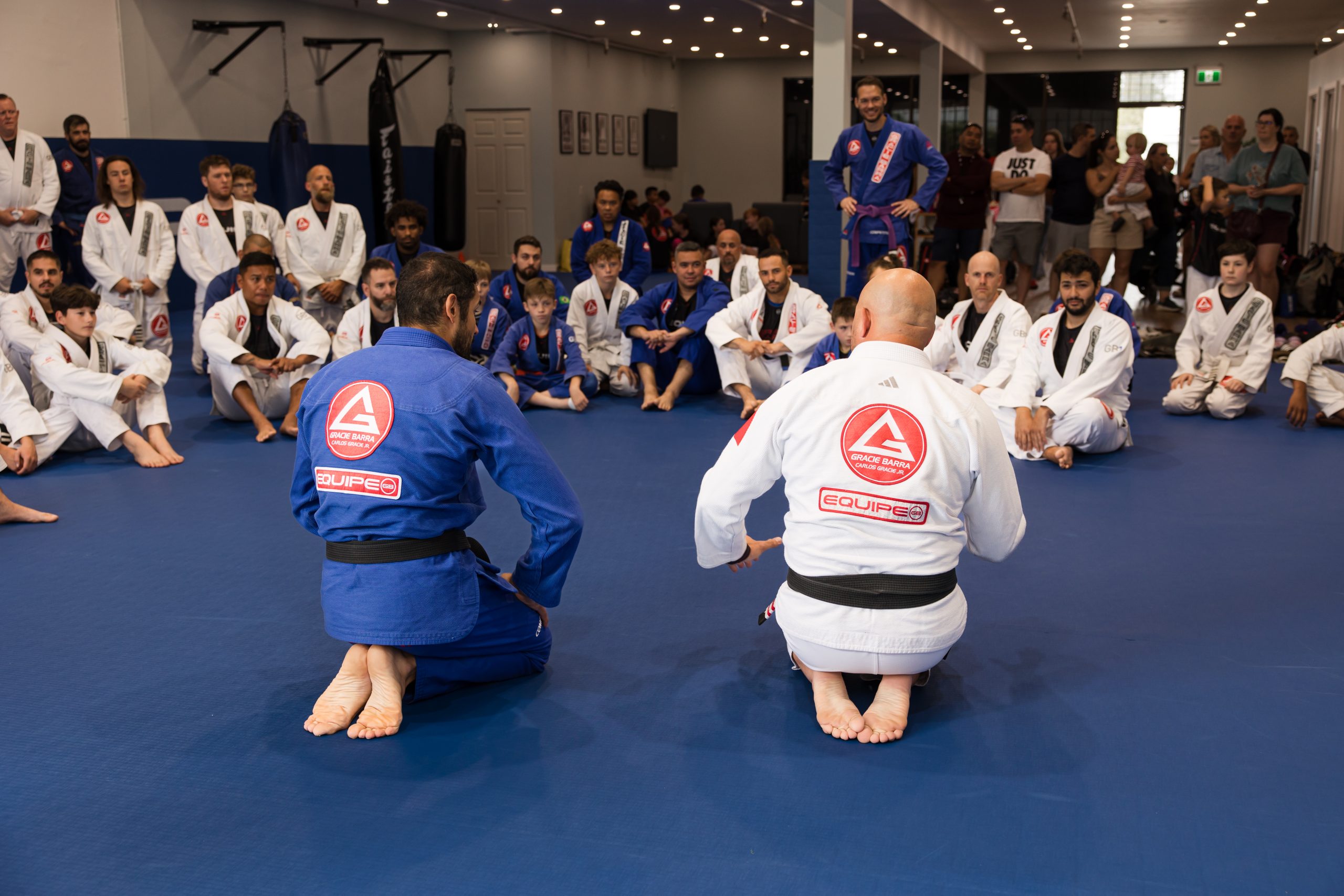
A Simple Plan for the Holiday Weeks
Here is a hypothetical example. A student who trains three times a week might keep two classes through early December, drop to one during the busiest holiday week, and book their first January class before the holidays even start. Having that date already set makes the return feel like part of the plan rather than a fresh start.
Families can use the break differently. With kids home from school, training together as a family can turn a quiet week into shared time on the mat. And if your child starts resisting class once the weather turns, look at what changed before deciding anything, because kids who want to quit usually have a specific reason behind it.
DISCOVER Gracie Barra Maple Ridge
CLICK HEREHow to Stay Consistent With Jiu-Jitsu Until Spring
To stay consistent with jiu-jitsu through winter, lower the friction instead of waiting for motivation: fixed days, a packed bag, a minimum number of classes and a plan for the holidays. Skip class when you are genuinely sick, and come back as soon as you are well rather than waiting for the new year.
If your routine has already slipped, the easiest fix is to book one class this week. The coaches at Gracie Barra Maple Ridge can help you choose sessions that fit your winter schedule.